
A geometric parquetry pattern can look precise in a sample. Across an entire room, however, even a small difference in alignment, proportion or timber variation can become immediately noticeable.
This is why bespoke parquetry is not simply about choosing an attractive pattern. The finished result depends on how the design is developed, how each element relates to the next and how carefully the floor is set out and installed.
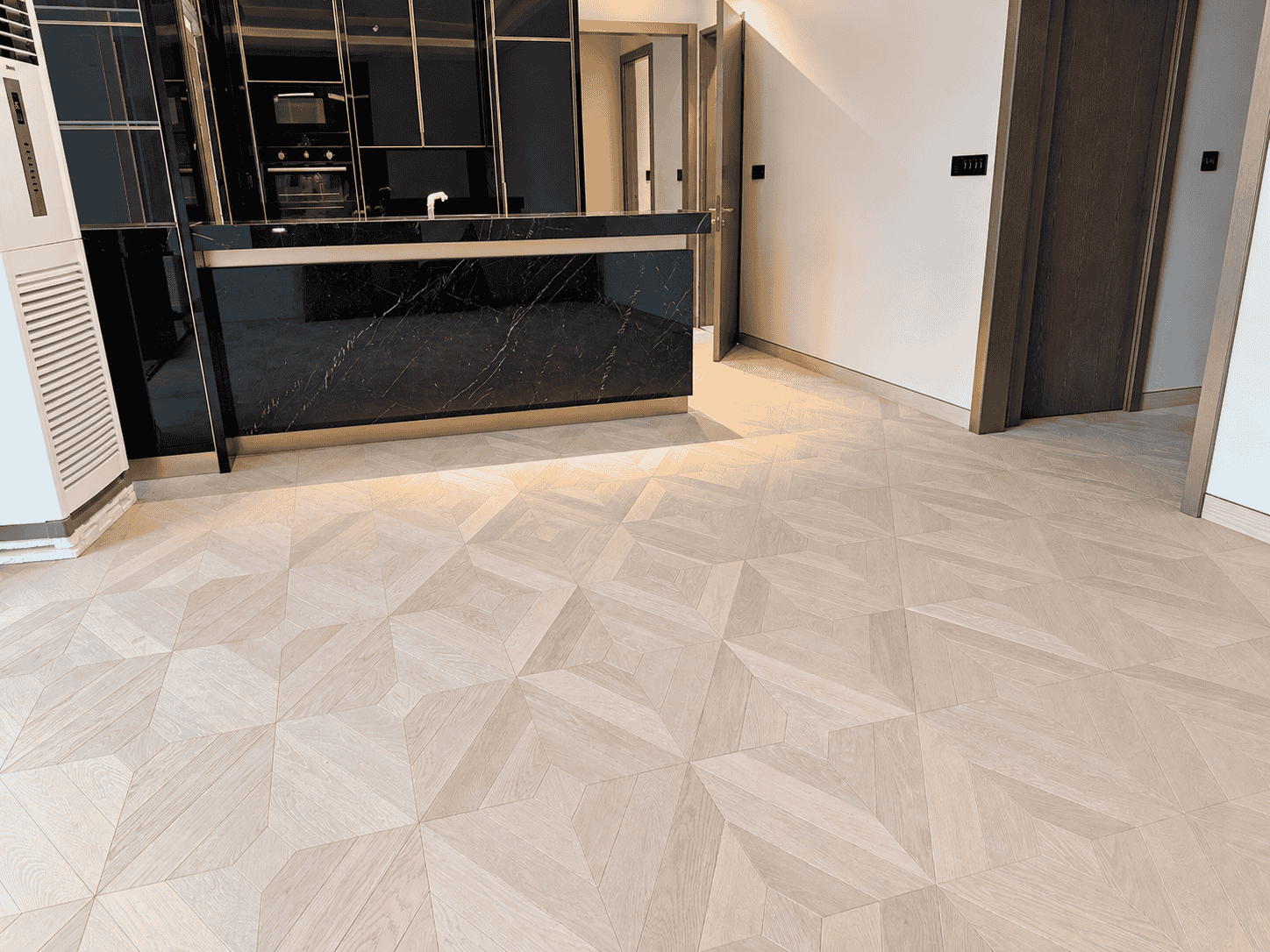
In a recent high-end residential project in Dubai, The Floorist installed a custom diamond-shaped wooden parquetry design that demonstrates how pattern, natural timber variation and installation accuracy work together across a larger space.
With conventional straight planks, small dimensional variations may be less visually obvious.
Geometric parquetry is different.
Diamond-shaped pieces repeatedly meet at defined points, creating larger forms across the floor. If the starting line is incorrect or individual elements move out of alignment, the effect can continue across the installation.
For this reason, setting out should be considered before installation begins. The dimensions of the room, doorways, fixed joinery, perimeter conditions and important sightlines all influence where a pattern should start and how it should finish.
The aim is not simply to fit the parquetry into the room, but to allow the pattern to read naturally within the architecture.
No two pieces of natural wood are completely identical.
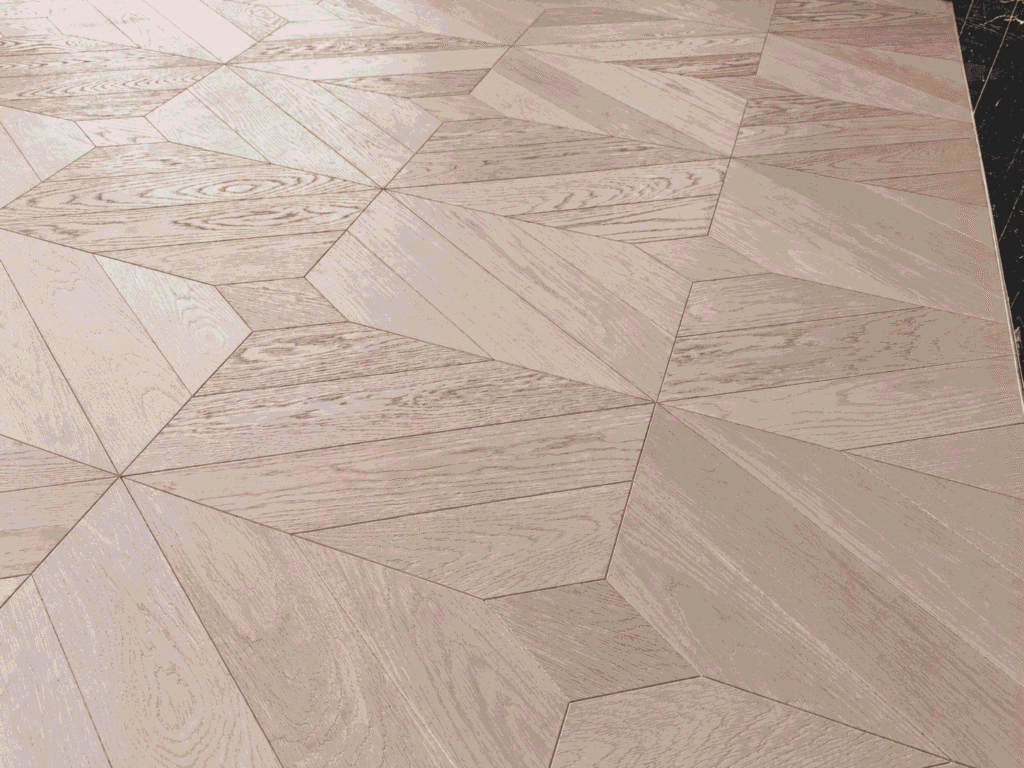
Grain movement, tone and figure vary from one piece to another. In a geometric floor, those differences can become part of the design because adjoining pieces may reflect light and display grain differently depending on their orientation.
This variation should not automatically be viewed as inconsistency.
When the material is selected and arranged appropriately, the differences between individual pieces can give the floor depth and prevent a repeated geometric pattern from appearing flat or artificial.
The images from this installation show how the changing grain direction strengthens the three-dimensional character of the diamond pattern while maintaining a restrained overall colour palette.
The visual result is only one part of a parquetry installation.
The subfloor still needs to meet the requirements of the selected flooring system. Flatness, moisture conditions, preparation and the installation method can all affect how consistently the individual parquetry pieces sit together.
With a detailed geometric layout, irregularities beneath the floor may become more noticeable because numerous joints and meeting points need to remain aligned.
This is why preparation should be treated as part of the finished floor rather than as a separate stage.
A parquetry pattern should remain coherent as it moves between open areas, circulation zones and architectural features.
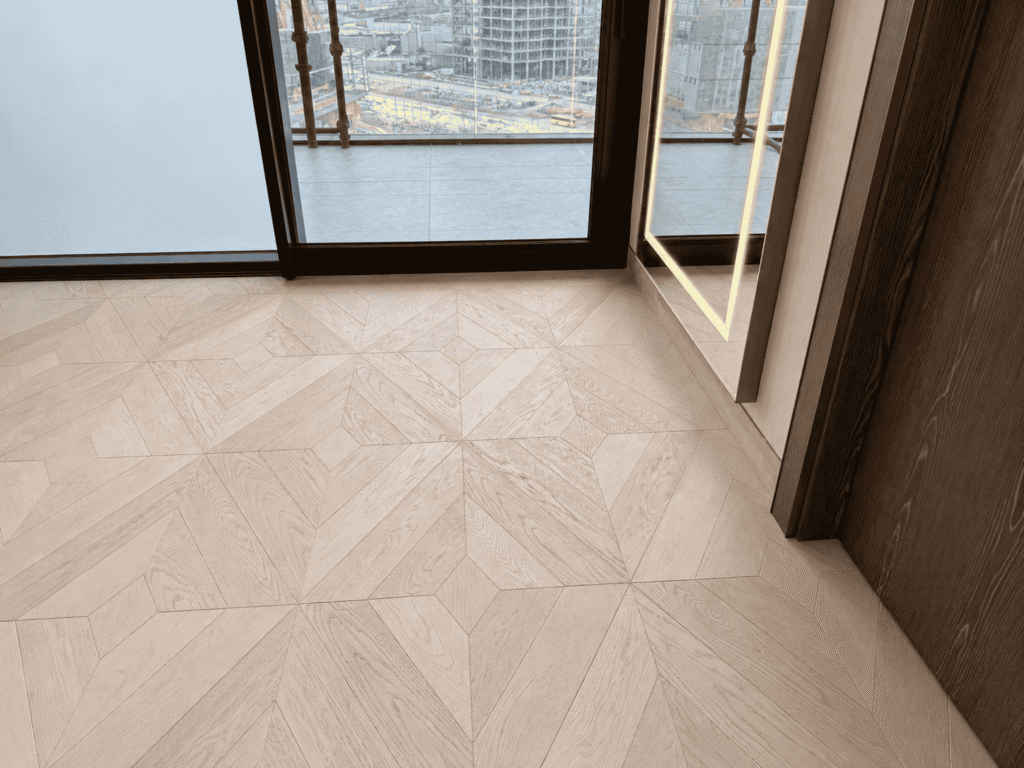
At this project, the diamond geometry continues across large floor areas while responding to walls, thresholds and adjoining spaces. Close-up views show how individual pieces connect, while wider photographs reveal the larger pattern that only becomes visible when the floor is viewed as a whole.
That relationship between detail and overall composition is one of the defining characteristics of bespoke parquetry.
Bespoke parquetry can turn the floor into an architectural element rather than simply a surface finish.
But the pattern alone does not create the result. Material selection, proportion, setting out, subfloor preparation and installation accuracy all contribute to how the completed floor performs visually.
At The Floorist, we support bespoke wooden parquetry projects from design development and sampling through to technical coordination and installation.
Planning a bespoke parquetry floor? Speak to The Floorist team about pattern development, samples and project-specific installation support.
Adding {{itemName}} to cart
Added {{itemName}} to cart