
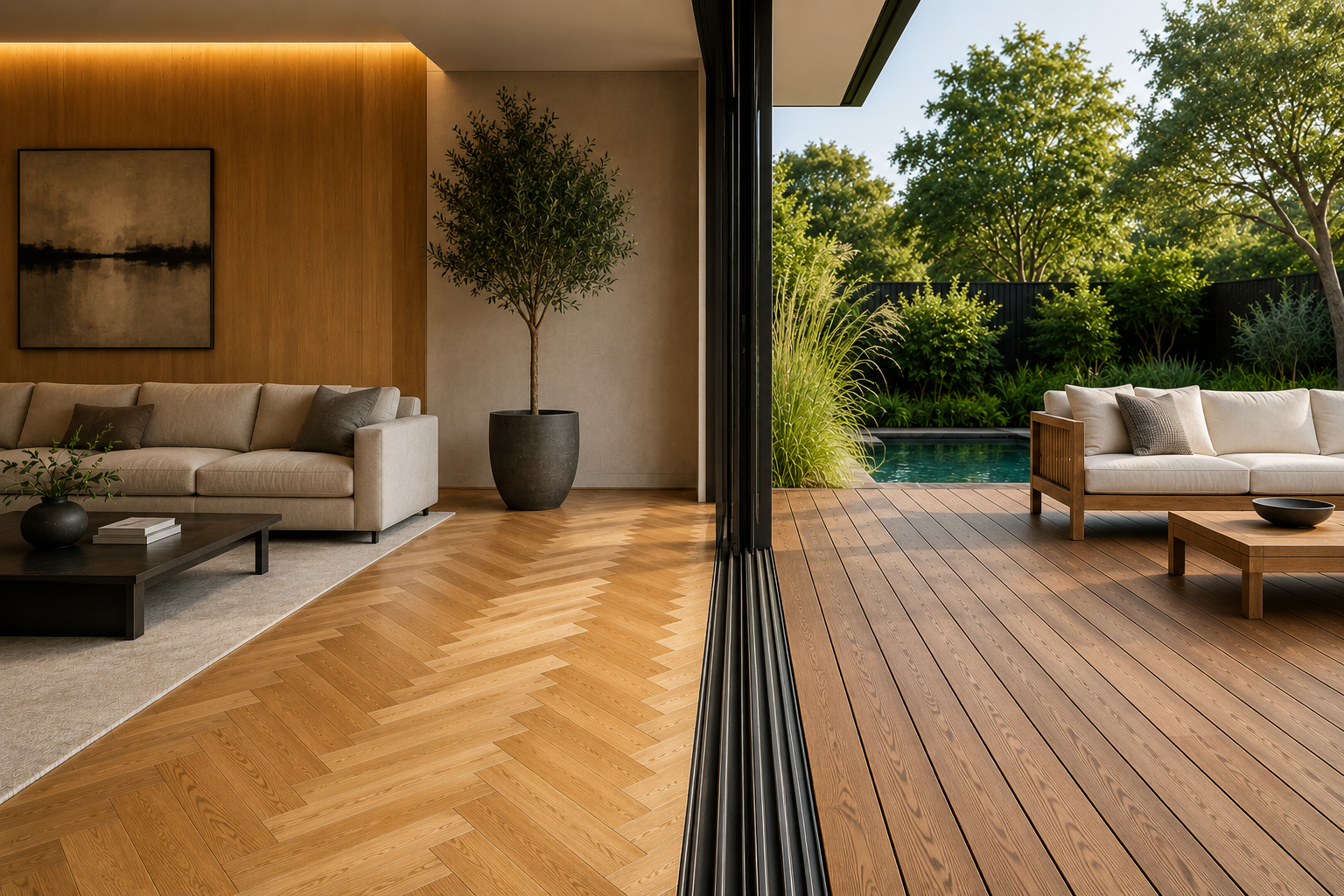
In high-end residential and hospitality design, the transition between indoor and outdoor spaces matters. When the doors open, the flooring should feel connected, calm and uninterrupted. But this is often where the design breaks.
Visible screws, wide expansion gaps, bulky threshold strips and exposed fixing systems can interrupt the clean lines created inside the space. What should feel like one continuous design suddenly becomes two separate areas. The solution is not only about choosing the right timber. It is about choosing the right flooring system.
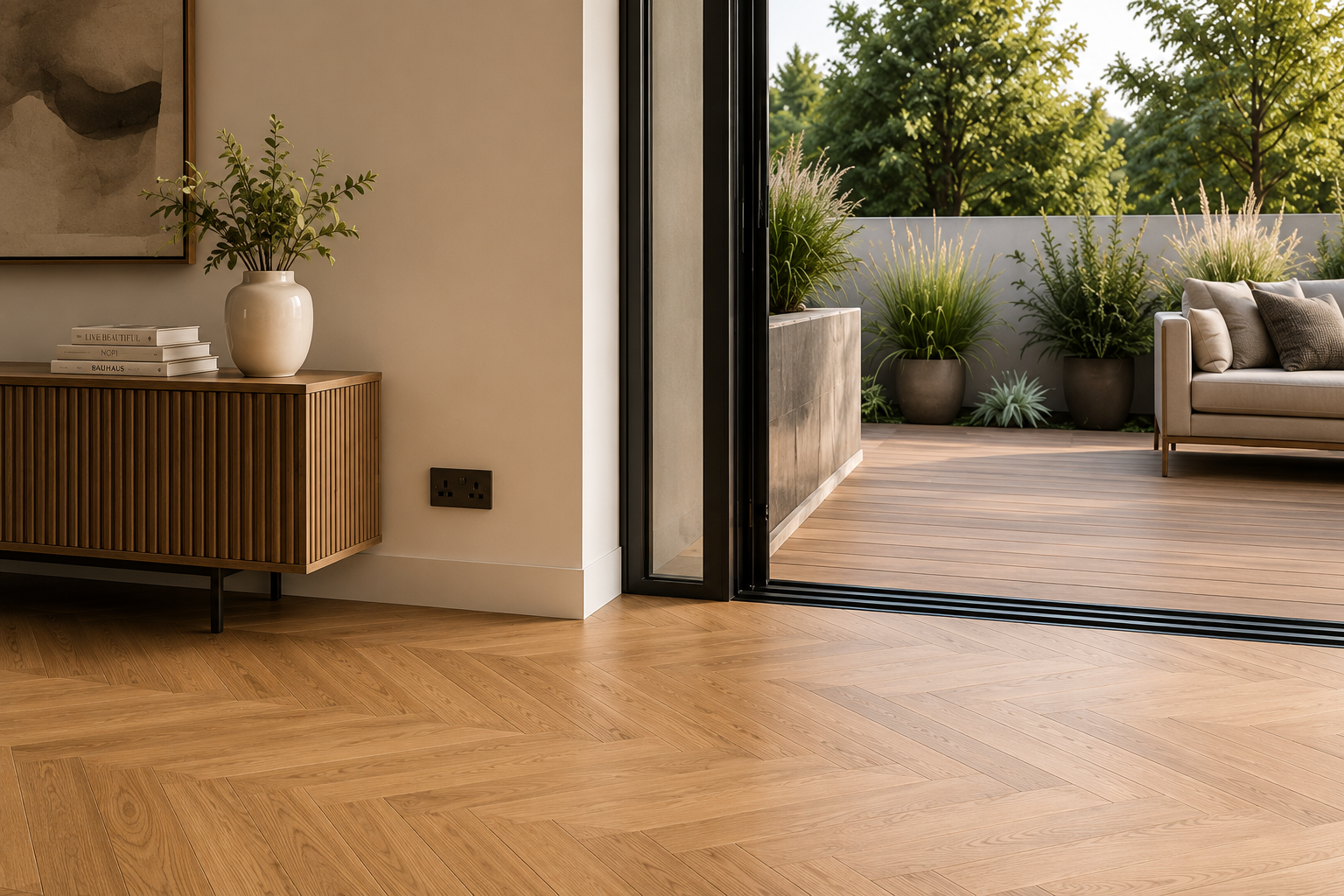
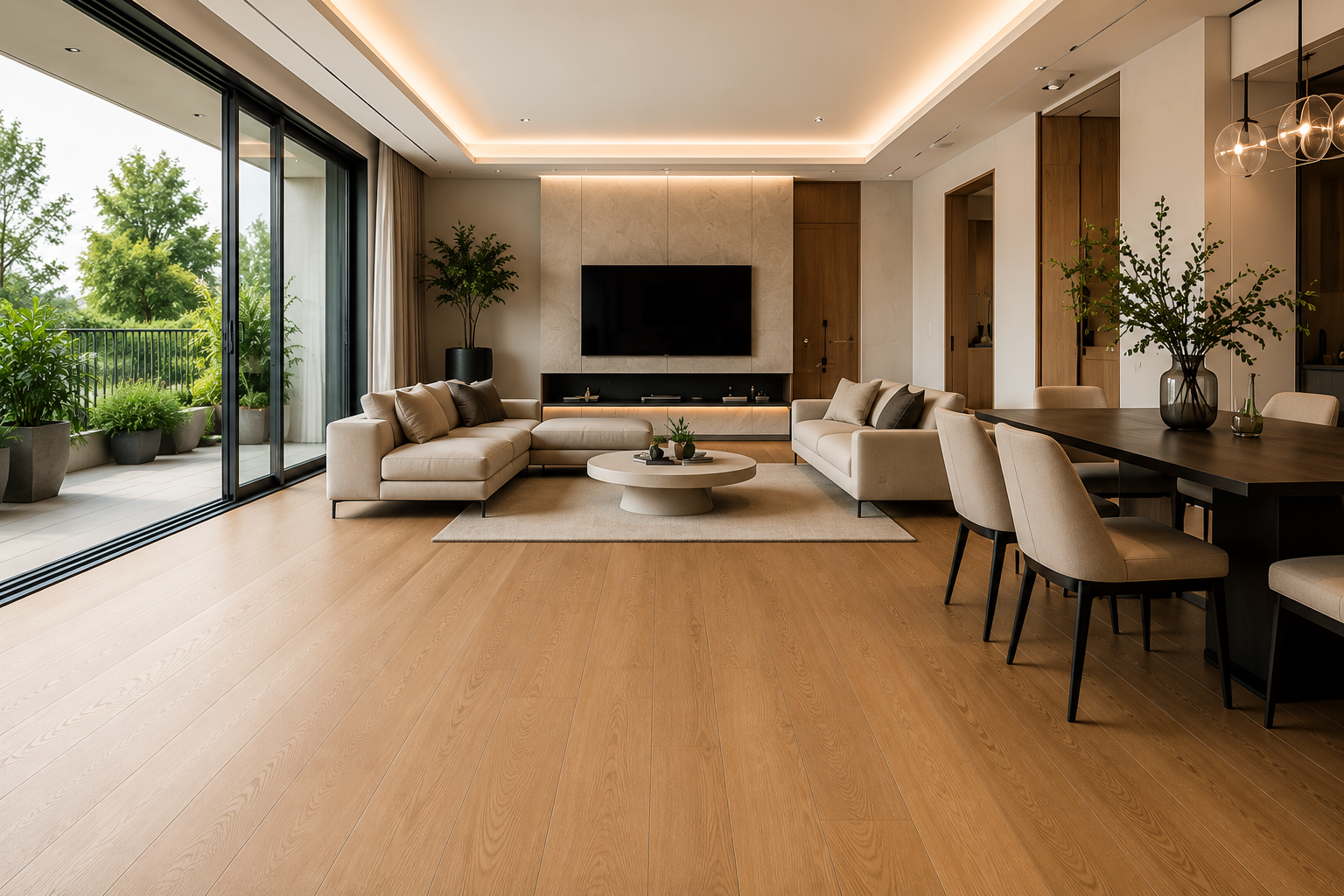
A seamless transition begins with the interior floor. Engineered wooden flooring is often preferred for premium interiors because it offers the warmth and character of natural wood with better dimensional stability than solid timber. Its multi-layer construction helps reduce movement caused by changes in temperature and humidity.
This makes it a practical choice for areas close to sliding doors, large openings and glass façades, where flooring needs to remain stable and visually clean. When installed correctly, engineered wood can meet the threshold neatly without the need for heavy transition strips, helping the interior floor feel refined and uninterrupted.
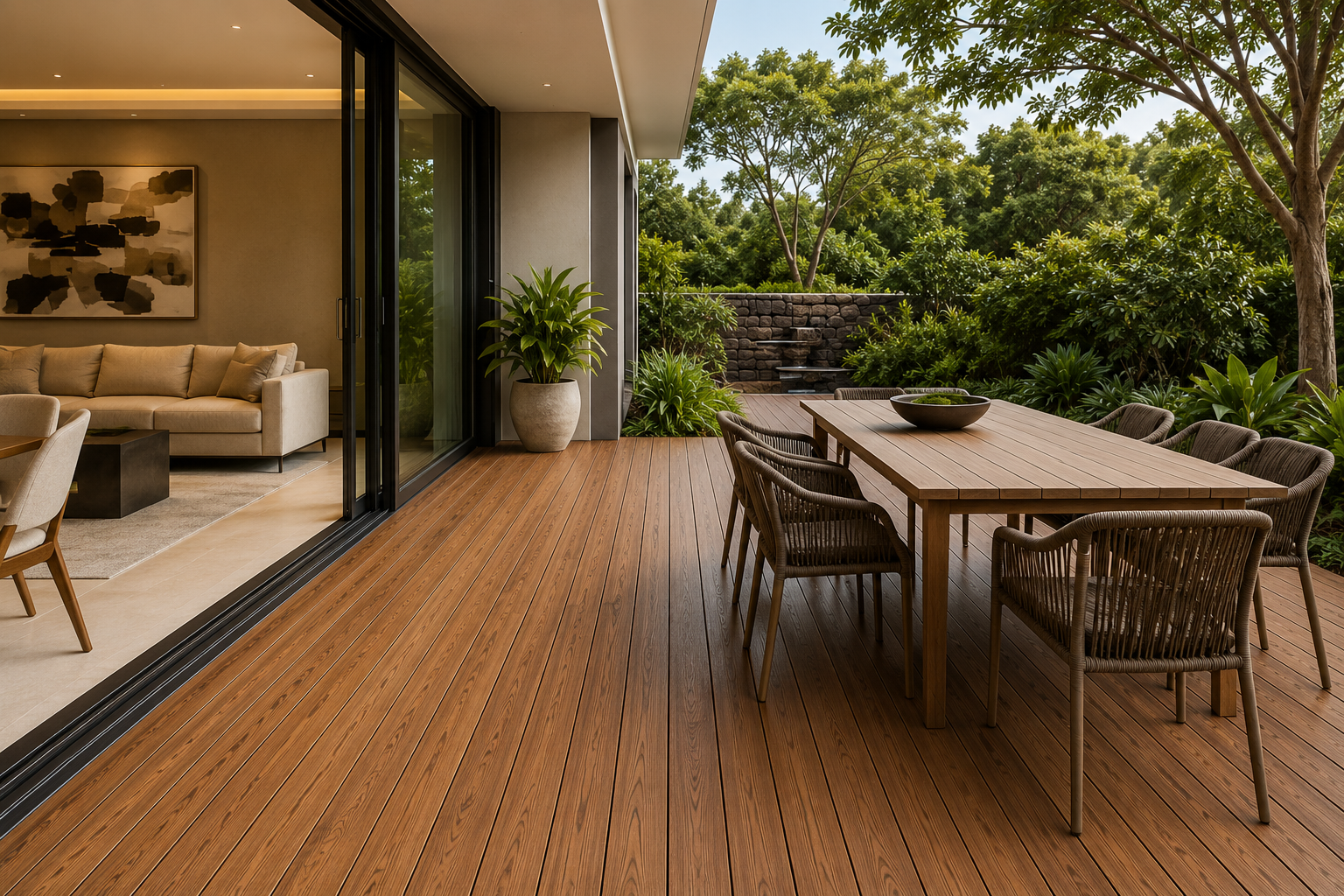
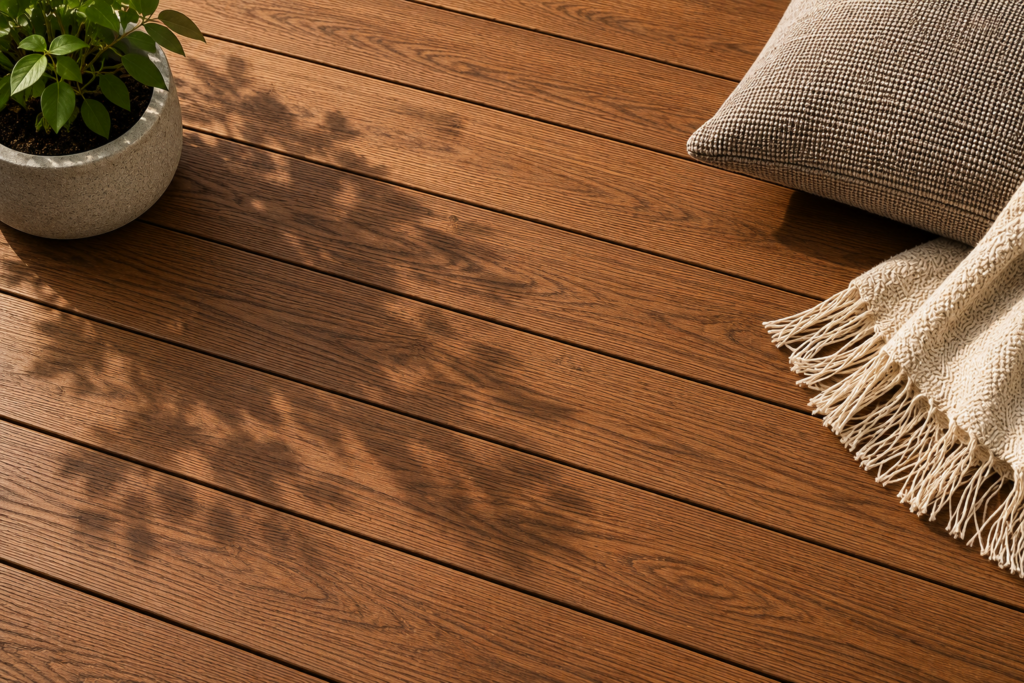
To continue the same design language outdoors, the decking system needs to be equally considered. Traditional outdoor decking often uses visible screws or face-fixings. While functional, these can affect the final appearance and create visual breaks across the surface.
A screwless decking system, such as Exterpark’s concealed fastening solution, helps keep the deck surface clean. The fixing system sits below the plank surface, keeping screws hidden and allowing the timber grain to remain visually uninterrupted. This creates a more refined outdoor finish and supports a safer, more comfortable surface underfoot.
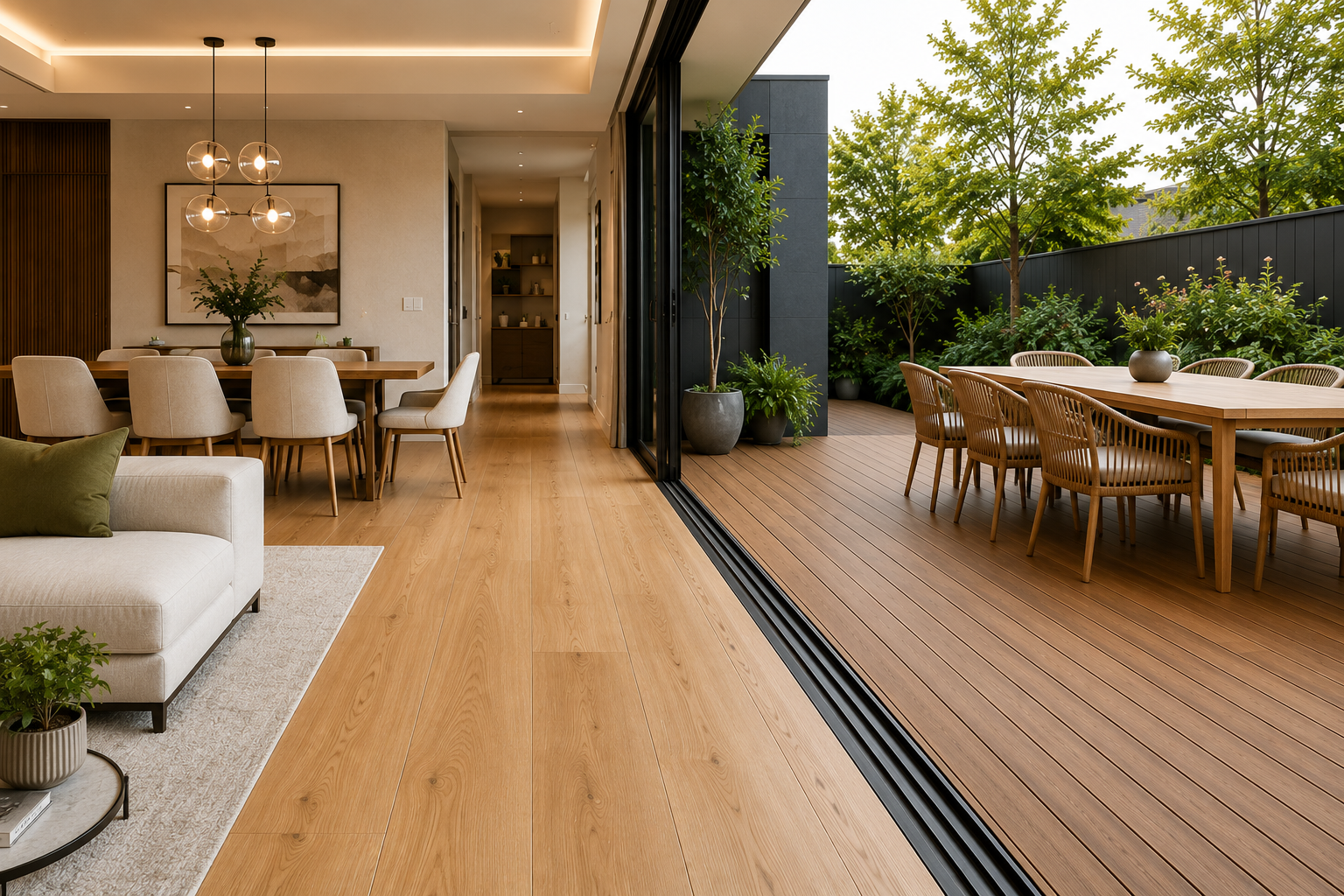
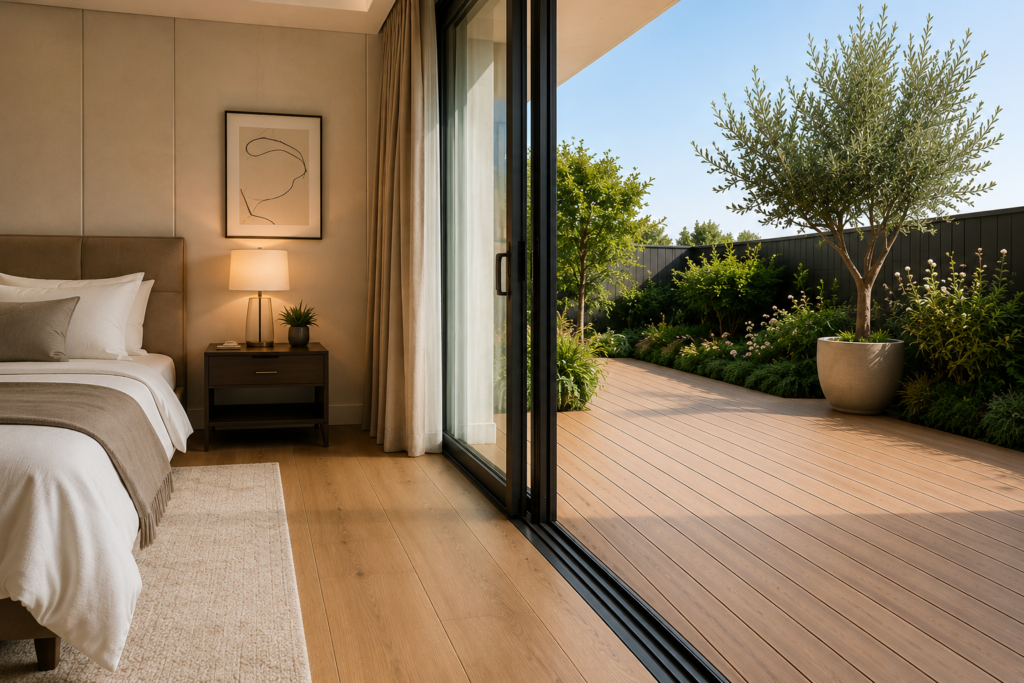
For a truly seamless result, indoor and outdoor materials should be coordinated from the beginning.
Plank direction, width, tone and finish all play an important role. For example, an engineered oak floor inside can be paired with an outdoor timber deck in a complementary tone, allowing both spaces to feel connected without forcing an exact match. When the flooring direction continues through the opening, the eye reads the space as one larger area.
A well-designed indoor-outdoor transition can:
At The Floorist, we support architects, designers and project teams with engineered wooden flooring, outdoor decking solutions, specification guidance and professional installation.
Because a seamless transition is not created by the surface alone. It is created by the details beneath it.
Adding {{itemName}} to cart
Added {{itemName}} to cart