
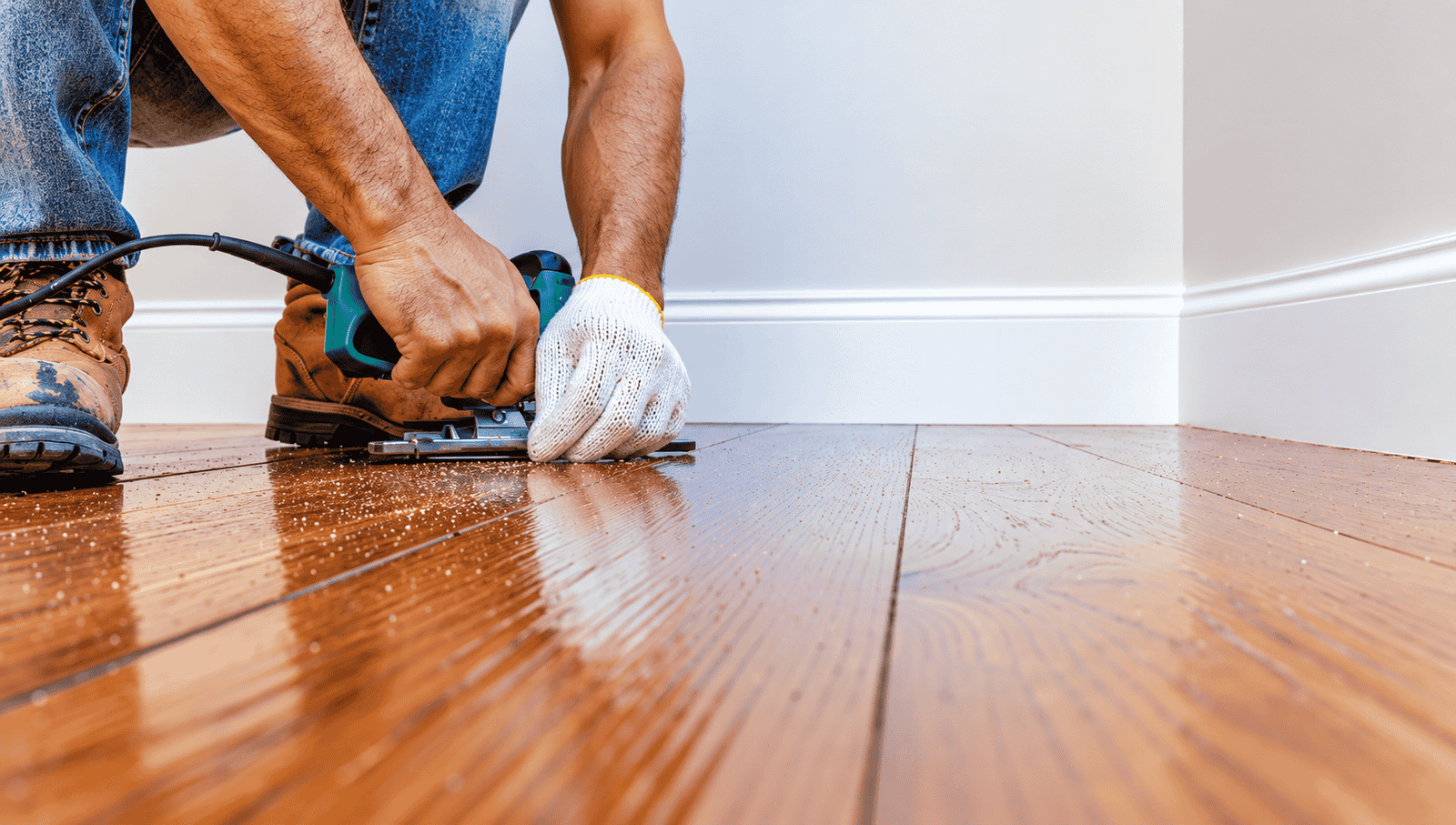
The small gap between engineered wooden planks can be worrying, especially when the floor was laid not long ago. It’s natural to ask yourself if the boards are splitting or if something went wrong during installation.
The reassuring answer is that minor variations between boards can occasionally be a normal reaction to the indoor environment. Even if you try to make wood more dimensionally stable, it is a natural material and it will react to moisture and relative humidity changes.
Small gaps between engineered wooden planks can be worrying, especially when the flooring was installed recently. It’s natural to ask yourself if the boards are splitting or if something went wrong during installation.
The reassuring answer is that minor variations between boards can occasionally be a normal reaction to the indoor environment. Although engineered construction improves dimensional stability, wood remains a natural material and continues to respond to changes in moisture and relative humidity.
According to the National Wood Flooring Association (NWFA), seasonal gaps are spaces that develop between boards as humidity levels change. Wood flooring is expected to move and this type of movement is considered a normal characteristic of wood flooring and not in and of itself evidence of a defect.
Yes, the outdoor conditions in the UAE may be hot and humid but the wood flooring spends most of its service life in an air-conditioned indoor environment.
Air conditioning changes the temperature and humidity of indoor air, and conditions may change if cooling systems are adjusted, turned off for long periods or operated differently when the building is occupied vs. unoccupied.
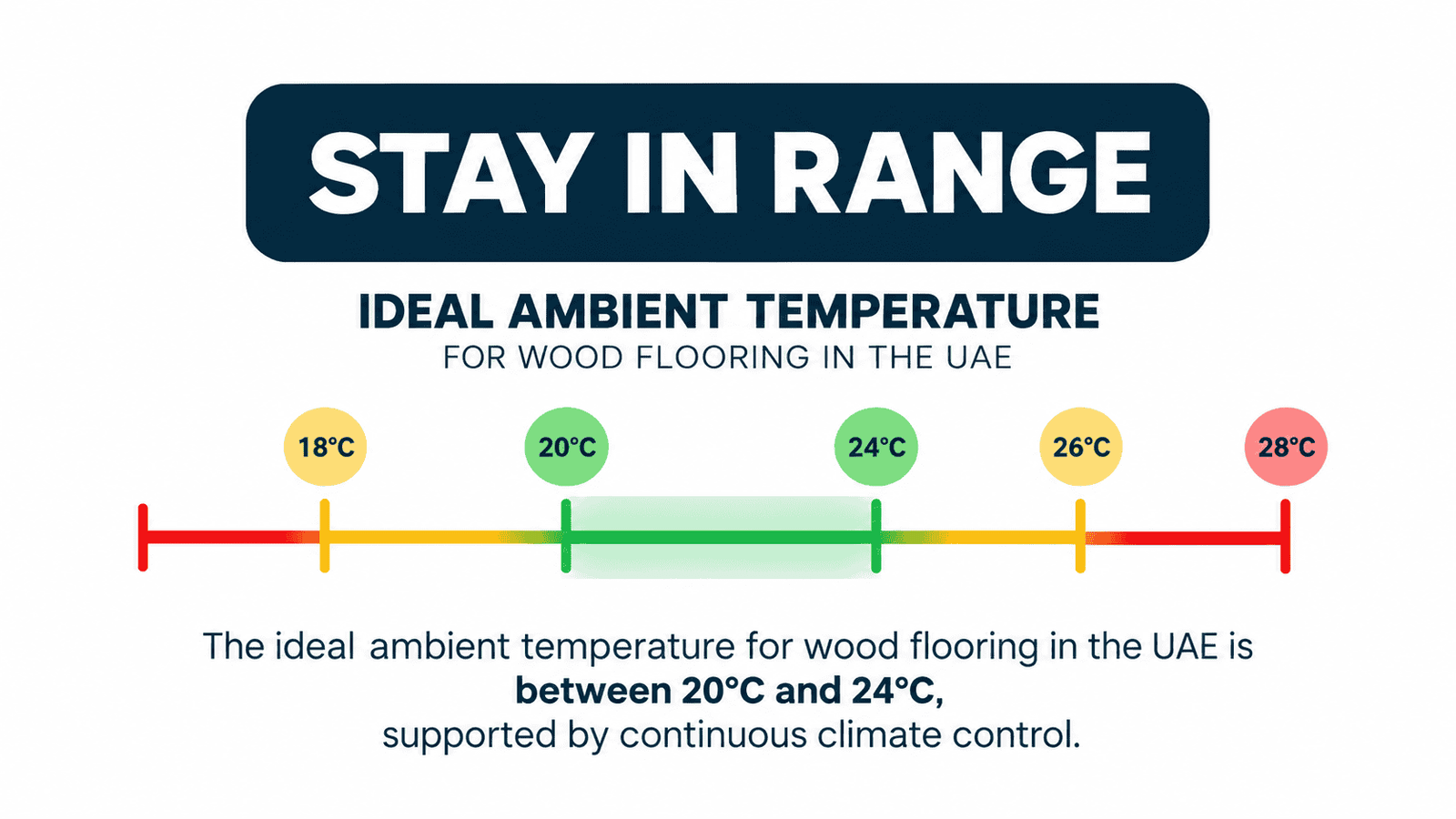
So it is important to maintain reasonably stable conditions inside for engineered wooden flooring. The needs of the flooring manufacturer must always come first. The Floorist usually operates at indoor conditions of around 20°C–24°C and 40% to 65% relative humidity, where applicable, subject to the needs of the particular product.
Not all gaps in a wooden floor are a problem.
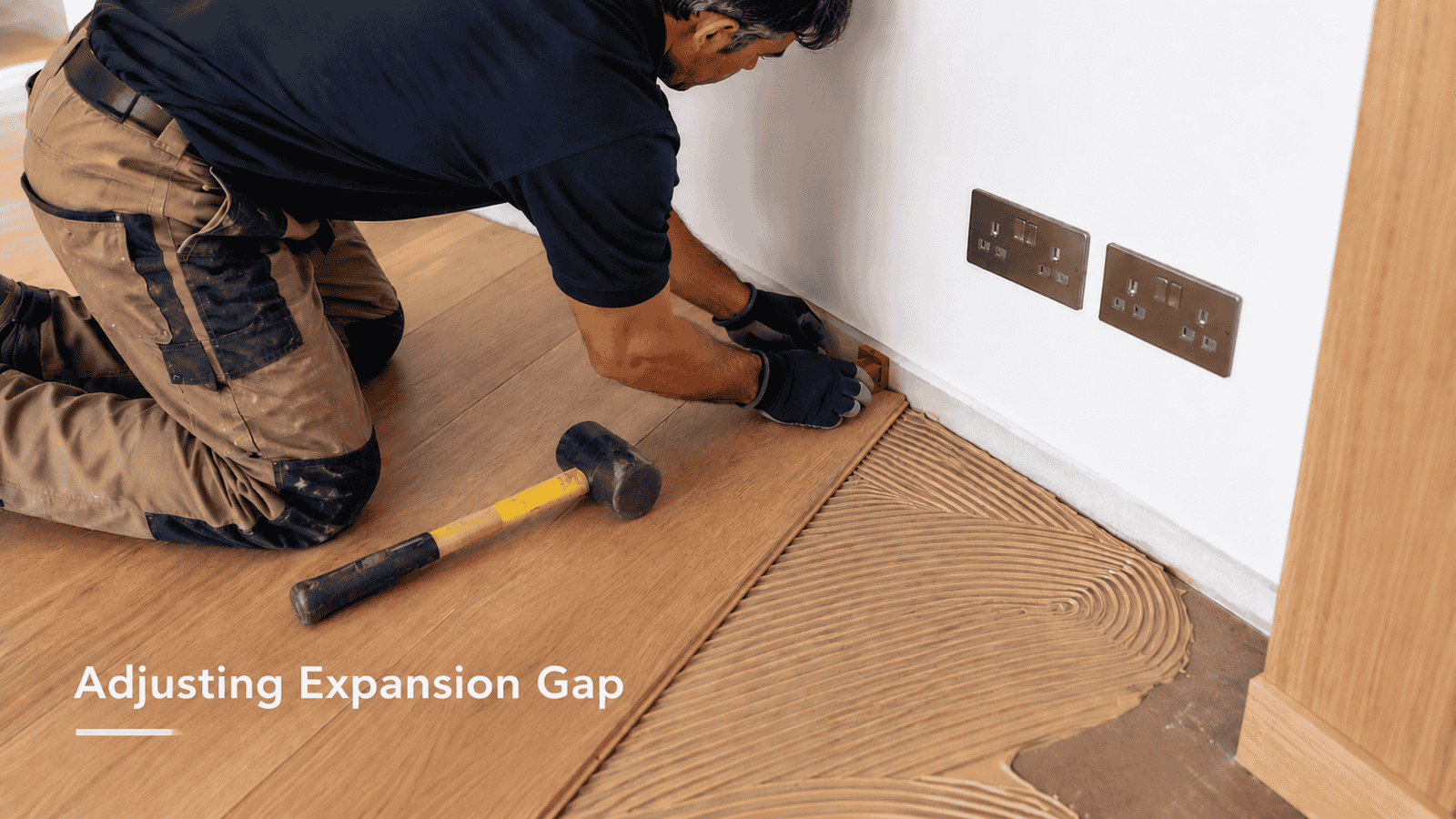
Typically, during installation, sufficient expansion space is provided around the perimeter and other fixed building elements, allowing the flooring to react to environmental changes without restriction.
It is therefore better to observe the floor over time rather than immediately filling every small gap that appears.
The NWFA specifically warns against filling normal seasonal gaps when the wood is contracted, as subsequent expansion may create further problems.
The important distinction is between small gaps that respond to changing indoor conditions and persistent or widespread gaps that remain unchanged or are accompanied by movement, lifting or distortion.
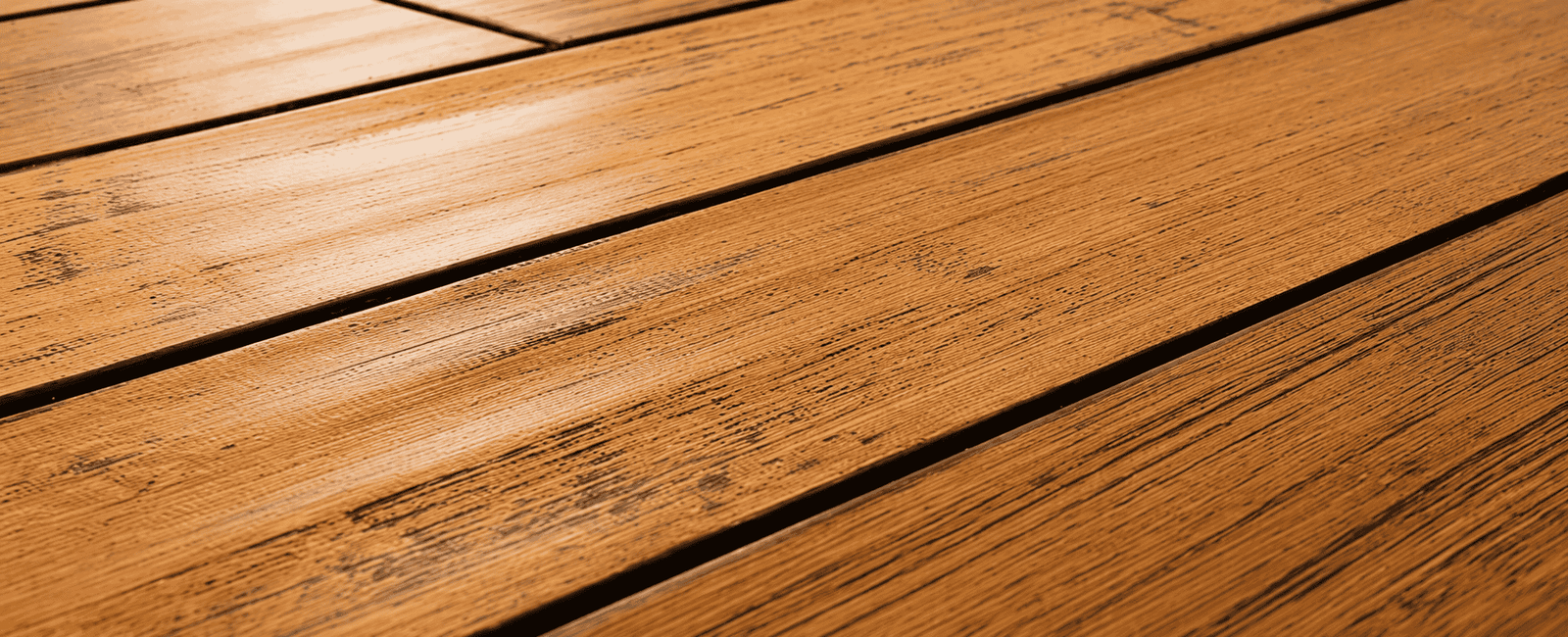
If a gap does not narrow as indoor conditions stabilize, if it appears extensively across the installation, or if it is associated with other changes such as movement, lifting, or distortion, it should be more carefully assessed.
Persistent gaps can be caused by moisture conditions that are not suitable, debris between the boards, problems with installation, movement of the substrate, or conditions that were not appropriate when the flooring was installed.
The cause should be identified before deciding on the appropriate repair.
Maintain reasonable consistency in air conditioning, address leaks or other sources of moisture promptly, and set and maintain the recommended indoor temperature and relative humidity for your flooring.
Most importantly, don’t think that every gap you see needs a filler or plank replacement.
At The Floorist, we understand that natural wood flooring is an investment and even a subtle change to its look can bring up questions. Our team can evaluate the flooring, indoor environment and installation specifics to help identify normal movement versus problem areas.
If you are concerned about gaps in your engineered wood flooring please send us photos of the affected area and our team can advise on what to do next.
Adding {{itemName}} to cart
Added {{itemName}} to cart